
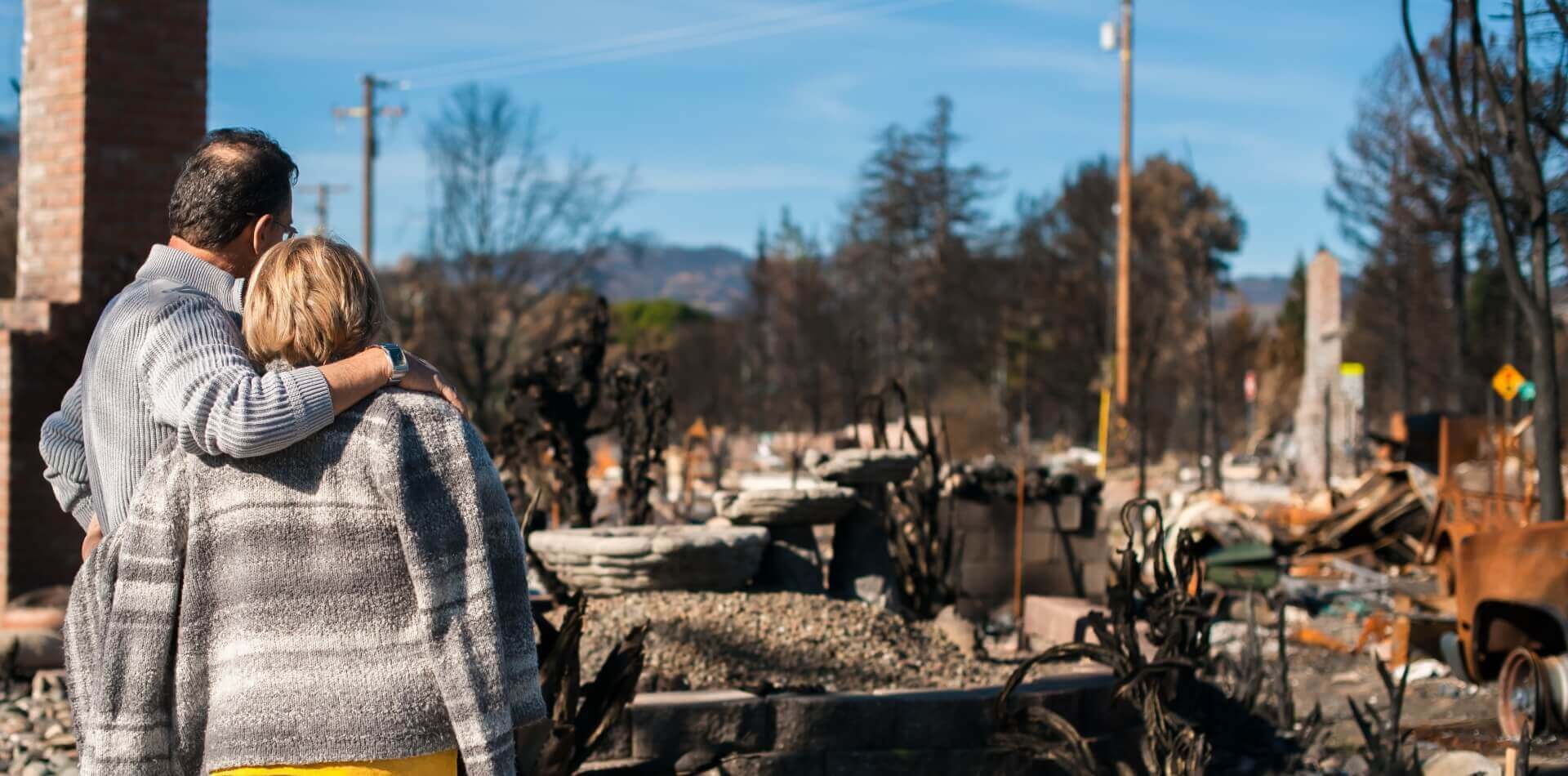
A house fire is one of the most stressful events a homeowner can face. Even after the flames are out, the damage may be far from over. Smoke can spread into rooms that never burned. Soot can settle inside vents, cabinets, clothing, furniture, and electronics. Water from firefighting efforts can create additional damage. And once the immediate emergency is under control, the insurance claim process begins.
House fires are also more common and costly than many people realize. According to the National Fire Protection Association, U.S. fire departments responded to an estimated 1.38 million fires in 2024. Those fires caused approximately $19 billion in property damage. NFPA also reported an estimated 351,000 residential structure fires in 2024, resulting in $11.7 billion in direct property damage.
Knowing what to do after a house fire can help protect your safety, your property, and your insurance claim. Use this checklist to stay organized, avoid common mistakes, and make sure important damage does not get overlooked.
1. Make Sure Everyone Is Safe First
Before thinking about insurance, repairs, photos, or cleanup, make sure everyone is safe.
If the fire is still active or emergency crews have not arrived, call 911 immediately. Get everyone out of the home and stay out until firefighters or local officials say it is safe to return. Do not go back inside to retrieve belongings, paperwork, valuables, or pets. Let emergency responders know if anyone or any animals may still be inside.
The U.S. Fire Administration warns that during a home fire, you may have less than three minutes to get out safely. That is why evacuation always comes first.
After the fire is extinguished, the property may still be dangerous. Common risks after a house fire include:
- Structural instability
- Electrical hazards
- Smoke inhalation risk
- Contaminated air
- Hot spots that could reignite
- Broken glass, exposed nails, or weakened flooring
- Water-damaged ceilings, floors, or walls
Even if the home looks stable from the outside, wait for official clearance before entering. The American Red Cross also recommends taking safety precautions when returning home after a fire.
2. Contact Your Insurance Company
Once everyone is safe, contact your homeowners insurance company to report the fire.
When you call, ask for:
- Your claim number
- The name and contact information of the assigned adjuster
- Instructions for submitting photos, videos, receipts, and documentation
- Details about your deductible
- Whether temporary repairs are allowed before the inspection
- Whether your policy includes additional living expense coverage
- Any deadlines or forms required for the claim
Keep your first report factual and simple. You do not need to guess about the full extent of the damage or commit to a cause if it has not been confirmed. Explain what happened, when it happened, whether the home is safe to occupy, and what damage is currently visible.
From this point forward, keep a record of every conversation with your insurance company. Note the date, time, person you spoke with, and what was discussed.
3. Secure the Property From Further Damage
Most homeowners insurance policies require policyholders to take reasonable steps to prevent additional damage after a covered loss. After a house fire, this may include securing the property from weather exposure, theft, vandalism, or further deterioration.
Depending on the damage, you may need to:
- Board up broken windows or doors
- Tarp exposed roof areas
- Shut off utilities if advised by professionals
- Remove standing water if safe to do so
- Protect undamaged belongings from smoke, soot, or moisture
- Arrange temporary fencing if the property is exposed
- Prevent unauthorized access to the home
Do not make permanent repairs until your insurance company has had a chance to inspect the damage, unless you have clear approval. Temporary repairs are usually meant to prevent the damage from getting worse, not to fully restore the home.
Save every receipt for emergency services, materials, board-up work, tarping, cleaning, storage, and temporary repairs. These costs may be reimbursable depending on your policy.
4. Document Everything Before Cleanup Begins
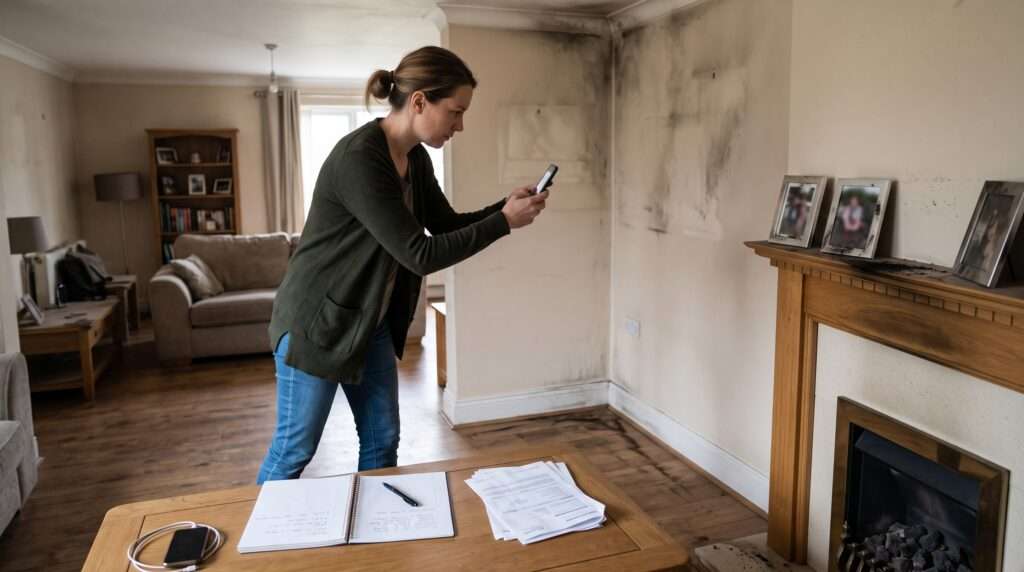
Documentation is one of the most important steps in a fire damage insurance claim.
Before removing damaged materials or throwing away belongings, take detailed photos and videos of the property. If it is safe to enter, document every affected area, not just the room where the fire started.
Take photos and videos of:
- Burned walls, ceilings, floors, and framing
- Smoke-stained walls and ceilings
- Soot-covered surfaces
- Damaged windows, doors, roofing, and siding
- Water damage from firefighting efforts
- Damaged furniture, appliances, electronics, and clothing
- Cabinets, closets, and storage areas
- HVAC vents and registers
- Attics, basements, and crawl spaces if accessible
- Detached structures, garages, sheds, or exterior damage
Use both wide shots and close-up photos. Wide shots show where the damage occurred, while close-ups show the severity. Video walkthroughs can also help create a clear record of the condition of the home immediately after the fire.
FEMA smoke damage guidance recommends keeping a written journal of actions and conversations after a smoke event. This same approach is helpful during a fire insurance claim. Use a notebook, spreadsheet, or digital document to track:
- Conversations with the insurance company
- Visits from adjusters, contractors, and restoration companies
- Temporary repairs made
- Cleaning or mitigation steps taken
- Expenses paid
- Damaged items discovered later
- Claim documents submitted
The more organized your documentation is, the easier it is to support your claim.
5. Create a Room-by-Room Personal Property Inventory
Many homeowners focus on structural damage after a fire and underestimate the value of damaged personal belongings. But a fire claim may also include contents such as furniture, clothing, electronics, appliances, tools, decor, and other household items.
Create a room-by-room inventory of damaged belongings. For each item, try to include:
- Item description
- Brand or model
- Approximate age
- Original purchase price
- Estimated replacement cost
- Photos or videos
- Receipts, if available
- Serial numbers for electronics or appliances
If receipts were destroyed or are unavailable, look for other proof of ownership or value. This may include:
- Online order history
- Credit card or bank statements
- Product manuals
- Warranty records
- Family photos showing the item
- Email confirmations
- Appraisals for high-value items
Do not limit your inventory to items that were visibly burned. Smoke, soot, ash, and water can damage belongings throughout the home. Clothing, upholstered furniture, mattresses, rugs, curtains, electronics, and artwork may all require cleaning, restoration, or replacement.
6. Track Additional Living Expenses
If your home is not safe to live in after the fire, your homeowners insurance policy may include loss of use or additional living expense coverage. This coverage can help pay for reasonable extra costs while your home is being repaired or restored.
Additional living expenses may include:
- Hotel stays
- Temporary rentals
- Meals above your normal food costs
- Laundry
- Storage
- Transportation
- Pet boarding
- Furniture rental
- Utility setup fees for temporary housing
Ask your insurance company what your policy covers, what limits apply, and how receipts should be submitted. Keep detailed records of every expense.
This is an area where homeowners can easily leave money on the table. If the home is unlivable because of fire, smoke, soot, water damage, or unsafe conditions, temporary housing costs may be part of the claim.
7. Watch for Hidden Smoke, Soot, Water, and Structural Damage
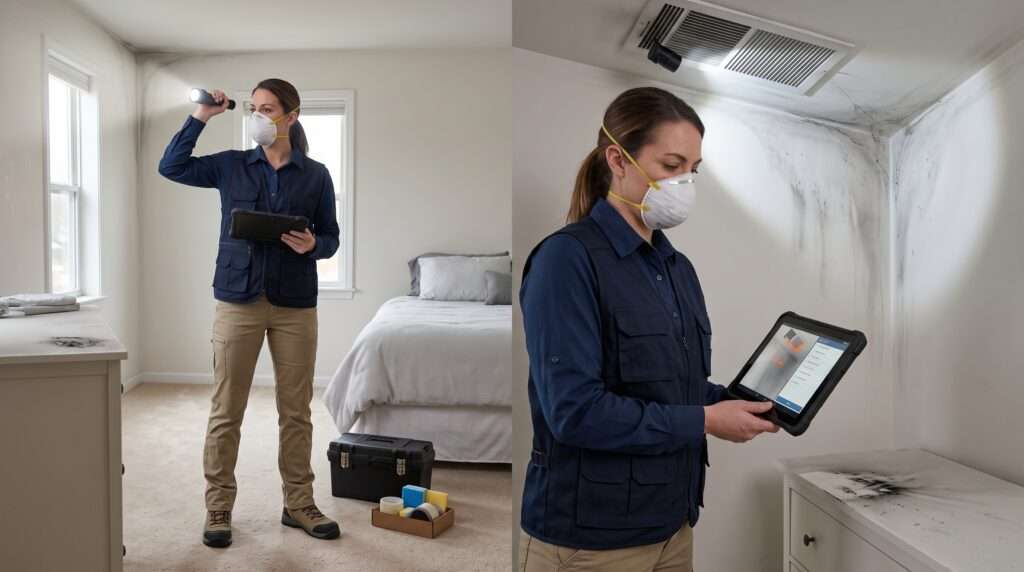
The visible fire damage may only tell part of the story.
Smoke and soot can travel well beyond the room where the fire started. They can move through hallways, vents, wall cavities, attics, and HVAC systems. Even rooms that look untouched may have odor, residue, or contamination that requires professional cleaning.
Common hidden fire-related damage includes:
- Smoke odor trapped in drywall, insulation, carpet, and upholstery
- Soot residue inside cabinets, closets, and vents
- HVAC contamination
- Damaged wiring or electrical panels
- Heat-damaged plumbing
- Compromised framing or roof structure
- Water damage from firefighting efforts
- Mold risk from lingering moisture
- Damaged insulation
- Smoke-damaged electronics
State insurance guidance notes that smoke damage may affect personal belongings such as clothing, furniture, and electronics. It also explains that additional living expense coverage may apply if the home is unlivable during smoke cleanup and repairs. You can find an example of this guidance from the Washington State Office of the Insurance Commissioner.
This is why a fire claim should not only focus on what burned. Smoke, soot, odor, water, and hidden structural damage can all affect the true cost of restoring the home.
8. Get Independent Repair and Restoration Estimates
After the insurance company inspects the property, they may provide an estimate for repairs. Review it carefully. The first estimate may not include the full scope of damage, especially if hidden smoke, soot, water, or structural issues are discovered later.
Fire restoration can involve several types of work, including:
- Emergency board-up or tarping
- Debris removal
- Demolition
- Structural repairs
- Roofing, siding, window, or door replacement
- Electrical repairs
- Plumbing repairs
- Smoke and soot cleaning
- Odor removal
- HVAC cleaning
- Contents cleaning
- Water mitigation
- Mold prevention
- Painting and finishing work
- Code-required upgrades
Getting independent estimates from qualified contractors, restoration professionals, or specialists can help you compare the insurance company’s estimate against the actual cost of repair.
When reviewing estimates, look for:
- Missing rooms or areas
- Incomplete smoke or soot remediation
- Low labor rates
- Missing materials
- Inadequate cleaning scope
- Excluded contents
- No HVAC cleaning despite smoke spread
- No allowance for odor treatment
- Missing water damage repairs
- Depreciation that seems excessive
- Code upgrades that were not considered
A fire damage estimate should reflect the full scope of work needed to return the home to its pre-loss condition, subject to the terms of the policy.
9. Review the Insurance Estimate Before Accepting a Settlement
Fire and lightning claims are less frequent than wind, hail, or water damage claims, but they can be among the most expensive homeowners insurance losses. The Insurance Information Institute reports that about one in 425 insured homes has a property damage claim related to fire and lightning each year.
Because fire claims can involve so many different categories of damage, it is important not to rush through the settlement process.
Before accepting a settlement, review whether the estimate includes:
- Structural fire damage
- Smoke and soot remediation
- Odor treatment
- Water damage from firefighting
- Damaged personal belongings
- Debris removal
- Temporary repairs
- Additional living expenses
- HVAC cleaning
- Electrical or plumbing repairs
- Roofing or exterior damage
- Required code upgrades
- Replacement cost vs. actual cash value calculations
Also ask how depreciation is being applied. If your policy includes replacement cost coverage, you may receive an initial actual cash value payment first, with recoverable depreciation paid after repairs or replacement are completed. The details depend on your policy.
If the insurance estimate is significantly lower than contractor estimates, or if it does not account for all affected areas, ask questions before signing off.
10. Know When to Call a Public Adjuster
Some fire claims are straightforward. Others become complicated quickly.
A public adjuster may be helpful if:
- The fire caused significant damage
- Smoke or soot spread throughout the home
- The home is unsafe or unlivable
- Your insurance estimate seems too low
- The claim is delayed
- The insurer denies part of the claim
- The cause of damage is disputed
- Your contents inventory is extensive
- You are unsure whether all damage was included
- You feel overwhelmed by documentation, estimates, and negotiations
The insurance company’s adjuster works for the insurance company. A public adjuster works for the policyholder.
Capital Adjusting Services helps homeowners document fire, smoke, soot, and related property damage, review the policy, prepare the claim, and negotiate with the insurance company. The goal is to make sure the full scope of covered damage is properly presented and that the homeowner has an advocate throughout the process.
Final Thoughts
Recovering from a house fire can feel overwhelming, but the first steps matter. Focus on safety first. Then document the damage, protect the property from further loss, track expenses, create a detailed inventory, and review the insurance estimate carefully.
Remember, the fire itself may only be one part of the claim. Smoke, soot, water damage, hidden structural issues, damaged belongings, and temporary living expenses can all affect the final settlement.
If your home has suffered fire, smoke, or soot damage, you do not have to handle the insurance claim alone. Capital Adjusting Services can help review your claim, document the full scope of damage, and work on your behalf to pursue a fair settlement.
Contact Capital Adjusting Services today for a free claim analysis.
Frequently Asked Questions
What should I do immediately after a house fire?
First, make sure everyone is safe and call 911 if emergency crews are not already on site. Do not re-enter the home until fire officials say it is safe. Once the immediate danger has passed, contact your insurance company, secure the property from further damage, and begin documenting the damage with photos and videos.
Should I throw away damaged items after a fire?
Do not throw away damaged belongings until they have been photographed, listed in your inventory, and reviewed as part of the claim process. Your insurance company may need proof of the damaged items before they are discarded.
Does homeowners insurance cover smoke and soot damage?
Most homeowners insurance policies cover smoke and soot damage from a covered fire, but coverage depends on the policy and the cause of the fire. Smoke and soot can affect walls, ceilings, furniture, clothing, electronics, HVAC systems, and other belongings.
Does insurance cover temporary housing after a house fire?
Many homeowners insurance policies include loss of use or additional living expense coverage if the home is not safe to live in after a covered fire. This may help pay for hotels, temporary rentals, meals, laundry, storage, transportation, or pet boarding, depending on the policy.
When should I hire a public adjuster after a fire?
Consider hiring a public adjuster if the fire caused major damage, smoke or soot spread throughout the home, the insurance estimate seems too low, the claim is delayed, or part of the claim is denied. A public adjuster represents the policyholder and can help document the loss, review the policy, and negotiate with the insurance company.