
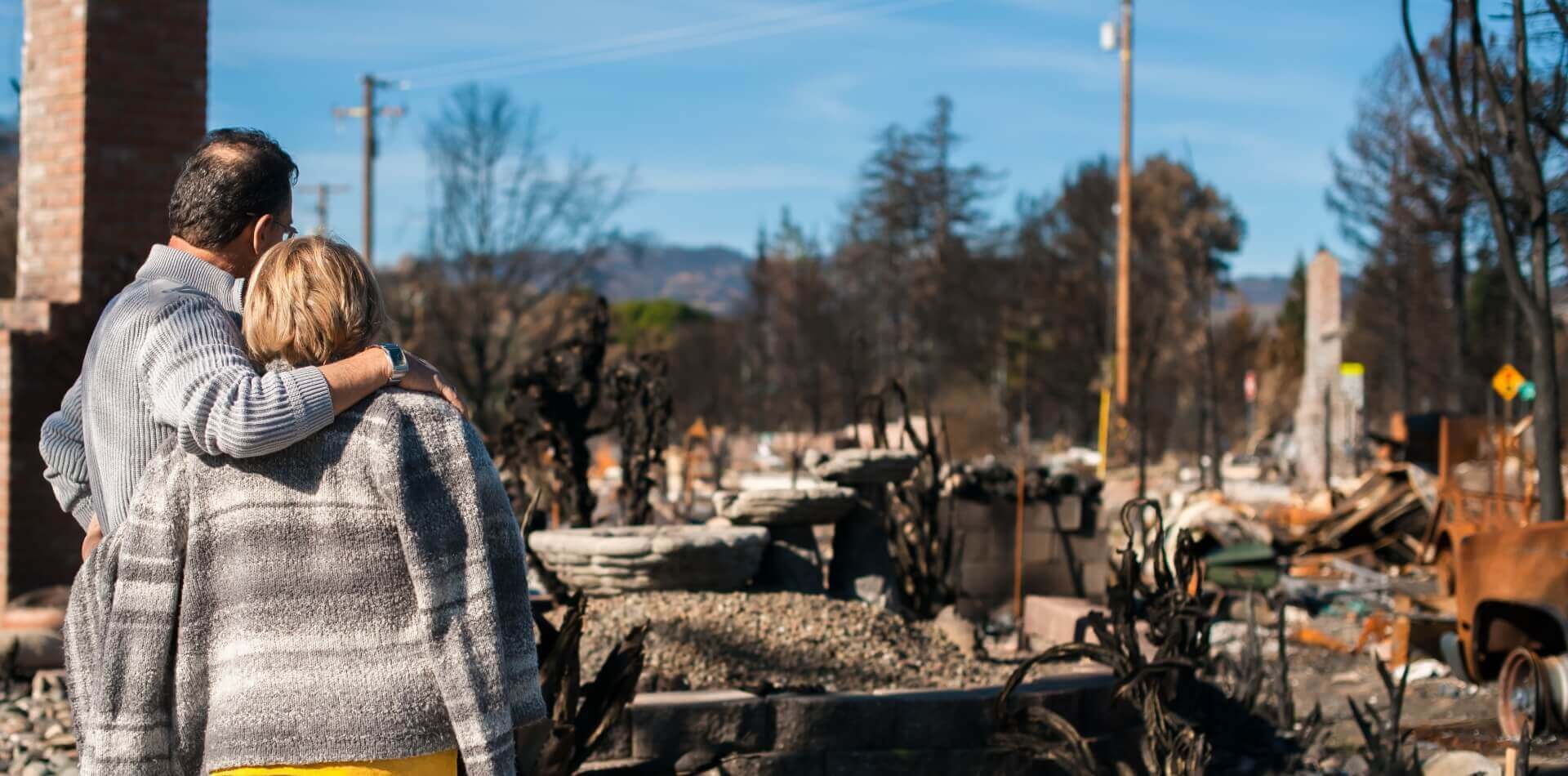
If your North Carolina home is damaged during a hurricane, the answer to whether homeowners insurance will cover it depends on one very important question:
What caused the damage?
That may sound simple, but hurricane claims can get complicated fast. A single storm can cause wind damage, roof damage, fallen trees, storm surge, inland flooding, power outages, and water intrusion. Some of those losses may be covered by a homeowners policy. Others may require separate flood insurance, a windstorm policy, or a specific endorsement.
The biggest distinction for most homeowners is this:
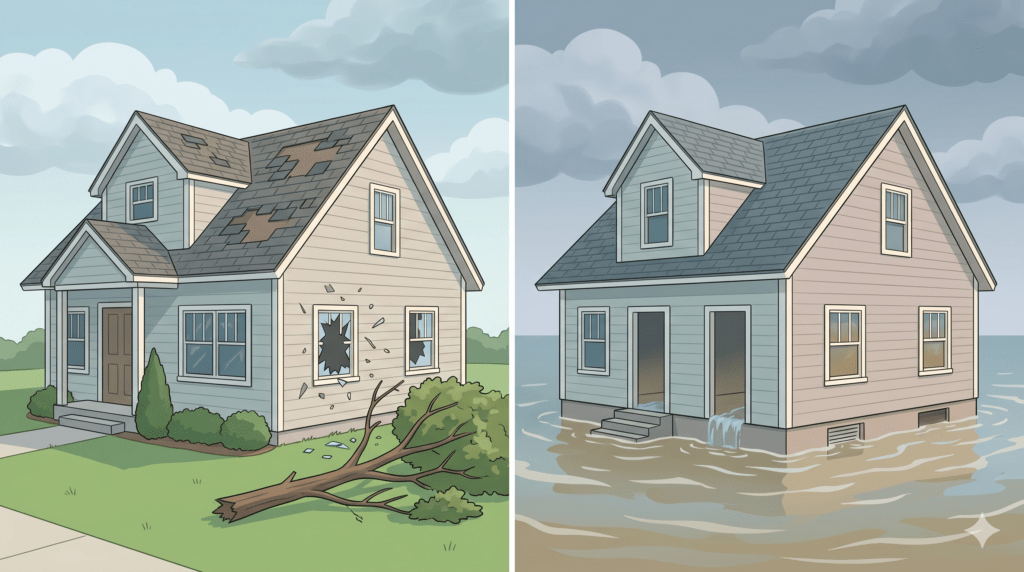
Wind damage may be covered by homeowners insurance, but flood damage usually is not.
That matters in North Carolina because hurricane damage is not just a coastal problem. According to the ReadyNC Hurricane Guide, the Atlantic hurricane season runs from June 1 through November 30, with peak season typically running from mid-August through late October. The North Carolina State Climate Office says North Carolina’s coast sees a hurricane every 5 to 7 years on average, and tropical systems have impacted every part of the state.
So before the next storm hits, it is worth understanding what your insurance may cover, what it probably will not cover, and where homeowners often get caught off guard.
The Short Answer: It Depends on the Cause of Damage
Homeowners insurance may cover some types of hurricane-related damage, especially if the damage is caused by wind, falling trees, or rain entering through a storm-created opening.
However, standard homeowners insurance usually does not cover flooding, storm surge, or rising water.
That means the same hurricane can create both covered and uncovered damage.
- If hurricane winds tear shingles from your roof and rain enters through the opening, that damage may be covered.
- If storm surge pushes water into your home from the ground level, that is usually considered flood damage and is not typically covered by standard homeowners insurance.
- If a tree falls on your roof during the storm, the resulting structural damage may be covered.
- If heavy rain causes water to rise and enter your home, you generally need flood insurance for that loss.
The key is not simply whether the damage happened during a hurricane. The key is whether the damage came from a covered cause of loss.
This is also why homeowners should not focus only on the hurricane category. The National Weather Service Raleigh hurricane preparedness guide explains that the Saffir-Simpson Scale is based on wind only. It does not measure rainfall, storm surge, flooding, tornado risk, storm size, or how slowly a storm may move across an area.
For insurance purposes, those details matter.
What Hurricane Damage May Be Covered by Homeowners Insurance?
Every policy is different, so homeowners should always review their own coverage and speak with their insurance agent. Still, there are several types of hurricane-related damage that may be covered by a homeowners policy.
Wind Damage
Wind is one of the most common hurricane-related causes of property damage. If wind is a covered peril under your policy, homeowners insurance may help pay for damage such as:
- Shingles torn from the roof
- Damaged siding
- Broken windows from wind-blown debris
- Damage to covered structures
- Interior damage caused by rain entering through a wind-created opening
In some coastal areas of North Carolina, windstorm and hail coverage may be excluded from the main homeowners policy. When that happens, property owners may need separate windstorm and hail coverage, sometimes through the North Carolina Insurance Underwriting Association, also known as the Coastal Property Insurance Pool.
This is a big reason homeowners near the coast should review their policies before hurricane season. You do not want to find out after a storm that wind coverage was limited, excluded, or handled through a separate policy.
Roof Damage
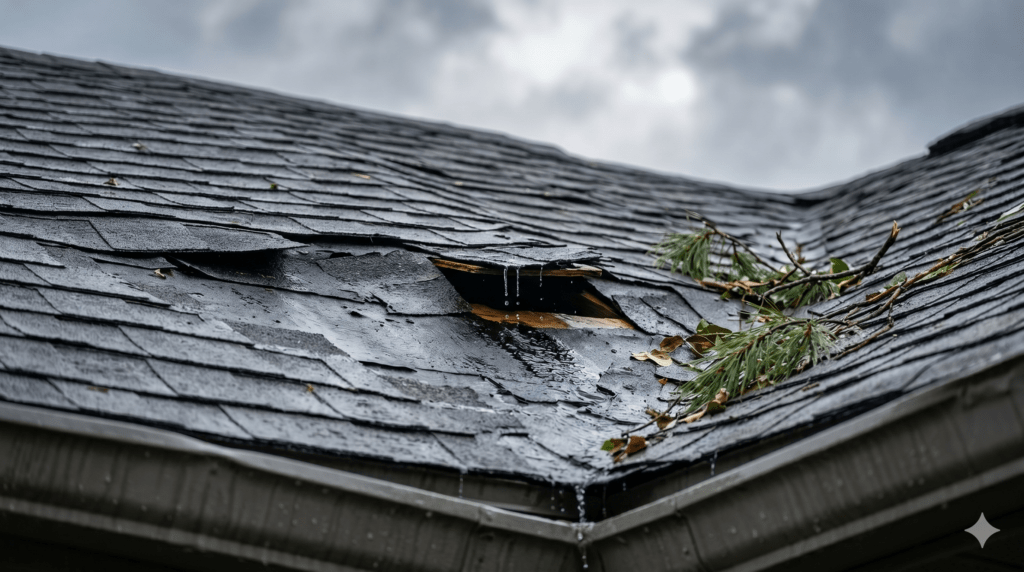
Roof damage is one of the most common concerns after a hurricane. Covered roof damage may include missing shingles, damaged flashing, punctures from falling limbs, or roof openings caused by high winds.
A common example would be:
Wind damages the roof during a hurricane. Rain then enters through the damaged area and causes water stains, ceiling damage, insulation damage, or other interior issues.
In that situation, the damage may be treated differently than water entering the home from flooding or storm surge.
One important note for North Carolina homeowners: even if roof damage is covered, the insurance company may not be required to replace the entire roof. The North Carolina Department of Insurance homeowners insurance FAQ says a homeowners policy provides coverage for direct physical damage and that the insurer only has to replace the damaged area, even if the shingles do not match.
That can be frustrating, but it is better to know that expectation before filing a claim.
Fallen Trees and Debris Damage
If hurricane winds knock a tree onto your house, garage, or another covered structure, your homeowners policy may cover the resulting damage.
Tree removal coverage can be more limited. The NC DOI homeowners insurance FAQ says a homeowners policy may pay reasonable expenses, up to $500 for one loss, to remove a tree if it damaged a structure or blocked the driveway.
So if a tree falls in the yard but does not damage a structure or block access, removal may not be covered.
Wind-Driven Rain
Wind-driven rain is one of the gray areas that often creates confusion.
Rain damage may be covered if wind first creates an opening in the home. For example, if hurricane winds damage the roof or break a window and rain enters through that opening, the resulting interior damage may be covered.
But if water enters because of poor maintenance, an old leak, worn roofing materials, or rising water from outside, the claim may be denied or limited.
This is where documentation becomes important. Photos, repair records, inspection notes, and a clear timeline can help show what happened and when.
What Hurricane Damage Is Usually Not Covered?
Some hurricane-related losses are commonly excluded from standard homeowners insurance policies. These exclusions are often where homeowners get surprised.
Flood Damage
Standard homeowners insurance policies do not cover flood damage. The North Carolina Department of Insurance flood insurance page says this directly: homeowners insurance policies do not cover flood damage.
Flood damage can include:
- Rising water
- Storm surge
- Overflow from rivers, lakes, creeks, or other bodies of water
- Water entering from the ground
- Heavy rain that accumulates and enters the home
- Mudflow or flood-related erosion
This is true even if the flooding was caused by a hurricane.
For flood protection, homeowners generally need a separate flood insurance policy through the National Flood Insurance Program or a private flood insurer. NC DOI also notes that just because a home is not in a designated flood plain, that does not mean it cannot experience flood damage.
That point is especially important in North Carolina, where recent storms have shown that inland flooding can be severe.
Storm Surge
Storm surge is caused by a hurricane, but it is usually treated as flood damage for insurance purposes.
The National Weather Service describes storm surge as water pushed toward shore by storm winds. It can cause severe coastal flooding, structural damage, road washouts, and flooding that travels inland through bays, rivers, and estuaries.
For homeowners, the insurance takeaway is simple:
Storm surge is not usually covered by standard homeowners insurance.
If a hurricane pushes ocean water into your home, you typically need flood insurance for that type of loss.
Groundwater and Rising Water
Water that rises from the ground or enters from outside is generally considered flood-related. That means standard homeowners insurance usually will not cover it.
This can include water entering through:
- Crawlspaces
- Basements
- Ground-level doors
- Foundation openings
- Flooded streets
- Saturated soil
- Overflowing waterways
Again, the storm itself may be a hurricane, but the cause of damage is still flooding.
Pre-Existing Damage or Poor Maintenance
Insurance is generally designed to cover sudden and accidental damage, not gradual deterioration or deferred maintenance.
A hurricane claim may be denied or reduced if the insurance company determines the damage was caused by:
- An old roof leak
- Rotten decking
- Poor drainage
- Existing structural problems
- Prior unrepaired damage
- Long-term wear and tear
This is one reason it helps to document the condition of your home before hurricane season. If you have photos, repair records, or inspection documentation, it may be easier to show that the storm caused new damage.
Power Outage Food Spoilage
Food spoilage after a hurricane-related power outage may not automatically be covered.
The NC DOI homeowners insurance FAQ says food lost in a power outage or disaster is probably not covered unless the homeowner has extra coverage or an endorsement. Some policies may offer limited coverage, but it is not something homeowners should assume.
Sewer Backup or Sump Pump Failure
Sewer backup and sump pump failure are often not covered unless the policy includes a specific endorsement.
Heavy rain from a hurricane can overwhelm drainage systems, but that does not automatically mean the damage is covered. Homeowners should check whether they have sewer backup, water backup, or sump overflow coverage.
Hurricane Insurance vs Flood Insurance in North Carolina
One of the biggest sources of confusion is the phrase “hurricane insurance.”
In many cases, “hurricane insurance” is not one separate policy. Instead, hurricane-related protection may come from a combination of:
- Homeowners insurance
- Windstorm and hail coverage
- Named storm or hurricane deductible provisions
- Separate flood insurance
- Optional endorsements, such as water backup coverage
Here is the simplest way to think about it:
| Type of Damage | Usually Homeowners Insurance? | Usually Flood Insurance? |
|---|---|---|
| Wind damages the roof | Often yes, depending on policy | No |
| Rain enters through a wind-created roof opening | Often yes, depending on policy | No |
| Storm surge enters the home | Usually no | Yes, if flood policy applies |
| River, creek, or coastal water overflows | Usually no | Yes, if flood policy applies |
| Tree falls on the roof | Often yes, depending on policy | No |
| Groundwater enters crawlspace or basement | Usually no | Possibly, if flood policy applies |
Flood insurance is also not something homeowners should wait to buy at the last minute. NC DOI says NFIP flood insurance generally has a 30-day waiting period before coverage becomes effective, although some exceptions may apply.
So if a storm is already approaching, it may be too late to buy flood insurance for that event.
How Named Storm and Hurricane Deductibles Work in North Carolina
Another area that surprises homeowners is the deductible.
Many people are used to a standard flat deductible, such as $1,000 or $2,500. But hurricane, windstorm, hail, or named storm deductibles may work differently.
In North Carolina, NC DOI says named storm deductibles are often calculated as a percentage of the Coverage A dwelling amount or Coverage C personal property amount listed on the declarations page.
For example, NC DOI gives this example:
A 2% named storm deductible on a home insured for $300,000 would equal $6,000.
That means the homeowner would be responsible for the first $6,000 of covered damage before the insurance coverage applies.
Named storm deductibles can also be triggered during a specific period. NC DOI says a named storm deductible typically applies to windstorm or hail loss beginning when an advisory, watch, or warning for a named storm is issued for any part of North Carolina by the National Weather Service. The period generally ends 24 hours after the last watch, warning, or advisory for that named storm in North Carolina.
The Insurance Information Institute also notes that hurricane deductibles are incorporated into many homeowners policies in coastal states, including North Carolina, and are often 1% to 5% of the insured value of a home.
The important takeaway:
Do not assume your hurricane-related deductible is the same as your standard deductible.
Before hurricane season, review the declarations page of your policy and look for:
- Standard deductible
- Windstorm deductible
- Hail deductible
- Named storm deductible
- Hurricane deductible
- Flood insurance deductible, if you have flood coverage
If you are not sure how your deductible works, ask your agent or insurance company to explain it in writing.
Why Hurricane Claims Can Become Complicated
Hurricane claims can become complicated because the damage is not always caused by one thing.
A single storm may create several types of damage at once. For example:
- Wind damages the roof.
- Rain enters through the damaged roof.
- Storm surge floods the first floor.
- A tree falls on the garage.
- Power goes out for several days.
- The insurance company questions whether some damage existed before the storm.
Each of those issues may be handled differently.
This is why the cause of damage matters so much. If the insurer says the damage came from flooding, pre-existing wear, or poor maintenance, the claim may be denied or reduced. If the homeowner believes the damage came from wind or another covered cause, the claim may require more documentation.
North Carolina homeowners also have to think about regional differences. Coastal homeowners may face more storm surge and windstorm coverage issues. Inland homeowners may be more exposed to heavy rain, flash flooding, fallen trees, and landslides.
Hurricane Helene made that risk very clear. NOAA NCEI reported that Helene’s most severe impacts included historic rainfall and flooding across much of western North Carolina, with up to 30+ inches of rain in some areas. The flooding damaged or destroyed homes, businesses, parks, hospitals, utilities, water systems, roads, highways, and bridges.
That kind of event shows why hurricane coverage is not just a beach-house issue.
What North Carolina Homeowners Should Do After Hurricane Damage
If your home is damaged during a hurricane, your first priority is safety. Avoid downed power lines, standing water, unstable structures, damaged trees, and any area that may not be safe to enter.
Once it is safe, take these steps.
1. Report the Loss
Contact your homeowners insurance agent or company to report the damage.
If you have a separate windstorm, hail, or flood policy, ask which company should handle each part of the loss. In some cases, more than one policy may be involved.
NC DOI says insurance companies in North Carolina should acknowledge receipt of a claim within 30 days. However, there is no specific deadline for settling every claim because the timeline can vary based on the details of the loss.
2. Prevent Further Damage
Homeowners are usually expected to take reasonable steps to prevent additional damage.
This may include:
- Placing a tarp over a damaged roof
- Boarding up broken windows
- Drying affected areas when safe
- Moving undamaged property away from water
- Securing the home if doors or windows are damaged
Keep receipts for temporary repairs and materials. NC DOI notes that reasonable expenses to protect your property may be reimbursed by the insurance company.
3. Document Everything
Before making temporary repairs, take photos and videos if it is safe to do so.
Document:
- Roof damage
- Siding damage
- Broken windows
- Fallen trees
- Interior water damage
- Damaged furniture or belongings
- Water lines or flood marks
- Damaged flooring, walls, ceilings, and insulation
- Receipts, invoices, and contractor estimates
Also write down a timeline of what happened. Include when the storm hit, when you first noticed damage, when you contacted the insurer, and who you spoke with.
4. Make Temporary Repairs, Not Permanent Repairs
Temporary repairs can help prevent more damage. Permanent repairs should usually wait until the insurance company has inspected the damage and you have agreed on repair costs.
The NC DOI windstorm and hail claim guidance advises homeowners not to make permanent repairs until the insurance company has had a chance to inspect the damage. You should also check with the insurance company before throwing away damaged materials or items.
5. Review Your Policy
Look for the sections covering:
- Covered causes of loss
- Exclusions
- Windstorm or hail coverage
- Named storm deductible
- Flood exclusions
- Additional living expenses
- Personal property coverage
- Claim reporting requirements
If the wording is confusing, ask your agent, insurer, or a claim professional to explain how it applies to your damage.
When to Consider Help With a Hurricane Insurance Claim
Not every hurricane claim requires outside help. A small, straightforward claim may be handled quickly with your insurance company.
But it may be worth getting help if:
- The damage is significant
- The insurance estimate seems too low
- The claim is denied
- The insurer says the damage was caused by flooding instead of wind
- The insurer says the damage was pre-existing
- The claim involves multiple policies
- The roof, water, or structural damage is difficult to assess
- You are unsure what your policy covers
- You feel pressured to accept a settlement before you understand the full damage
A public adjuster represents the policyholder, not the insurance company. For complex hurricane claims, a public adjuster can help document damage, review the policy, prepare estimates, and communicate with the insurance company.
For North Carolina homeowners, this can be especially helpful when a claim involves wind vs flood disputes, named storm deductibles, roof damage, or unclear coverage.
Final Thoughts: Know What Your Policy Covers Before the Next Storm
So, does homeowners insurance cover hurricane damage in North Carolina?
Sometimes.
Homeowners insurance may cover hurricane damage caused by wind, falling trees, roof openings, or other covered causes of loss. But it usually does not cover flood damage, storm surge, or rising water. Those losses typically require separate flood insurance.
The best time to understand that distinction is before a storm, not after one.
North Carolina homeowners should review their policies before hurricane season, confirm whether they have windstorm and flood coverage, understand their named storm deductible, and document their home and belongings. After a storm, they should take photos, prevent further damage, keep receipts, and avoid permanent repairs until the insurance company has inspected the loss.
If your hurricane claim becomes complicated, Capital Adjusting Services can help you understand your options and make sure the damage is properly documented.
FAQ
Does homeowners insurance cover hurricane wind damage?
Usually, yes, if wind is a covered cause of loss under your policy. However, some coastal North Carolina homeowners may have separate windstorm or hail coverage, so it is important to review your policy.
Does homeowners insurance cover flooding from a hurricane?
Usually no. Standard homeowners insurance policies typically do not cover flood damage, even if the flooding was caused by a hurricane. Flood damage usually requires a separate flood insurance policy.
Is hurricane insurance the same as flood insurance?
No. “Hurricane insurance” usually refers to hurricane-related coverage through homeowners insurance, windstorm coverage, or named storm provisions. Flood insurance is separate and covers qualifying flood damage.
What does hurricane insurance usually cover?
Depending on the policy, hurricane-related coverage may include wind damage, roof damage, fallen tree damage, and rain damage that enters through a storm-created opening. It usually does not include flooding or storm surge under a standard homeowners policy.
What is a named storm deductible?
A named storm deductible is a deductible that applies when damage is caused by a named storm during a defined period. In North Carolina, these deductibles are often percentage-based and listed on the policy declarations page.
What should I do after hurricane damage to my home?
Stay safe, report the loss, prevent further damage, take photos and videos, keep receipts, and avoid permanent repairs until the insurance company has inspected the damage.
Should I hire a public adjuster for hurricane damage?
Not every claim needs a public adjuster. But if the damage is severe, the claim is denied, the settlement seems too low, or the insurer disputes the cause of damage, speaking with a public adjuster may help.